
What Is Fractional Ownership? Own a Slice of Everything
From Manhattan real estate to Japanese stocks — fractional ownership makes owning premium financial assets as easy as buying a stock. Here's how it works and why now is the right time.
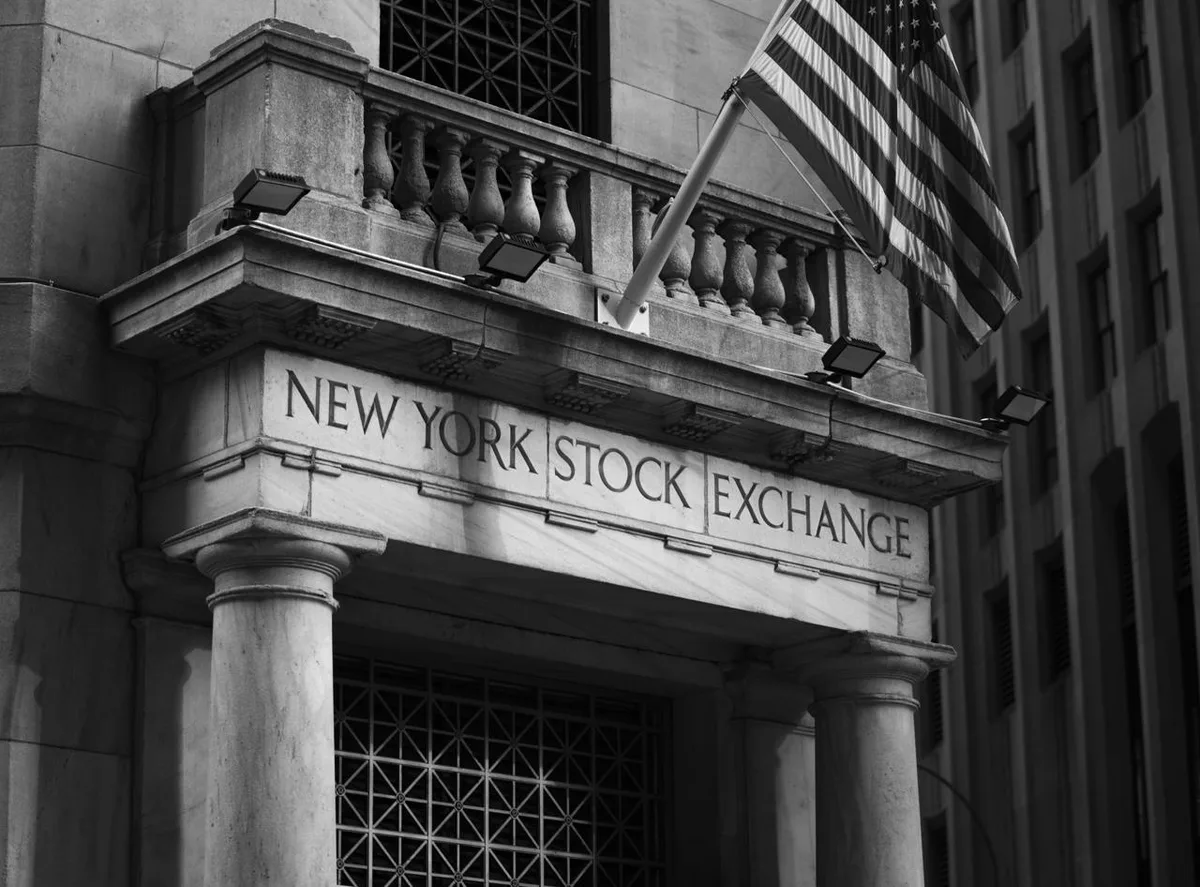
A few years ago, owning a piece of a Manhattan apartment, a slice of a Japanese manufacturing company, and a stake in German government bonds would have required three separate advisors, a six-figure minimum, and months of paperwork. Today, it takes a phone screen and about five minutes of your time.
From your pocket, you'll be able to own a square meter of Manhattan real estate, buy shares in a Japanese company, and invest in German government bonds — all from the same app. That's not a pitch for some distant future. That's fractional ownership, and it's already here.
The global fractional ownership market was worth $8.2 billion in 2024. By 2034, it's projected to reach $21.7 billion — growing at 11.1% annually. More than 340 platforms are competing for your attention worldwide, and over 3.1 million people have already taken the leap. Real estate alone accounts for 42.3% of that market.
What does that mean for you? It means the barriers that once kept premium assets locked behind closed doors — high entry costs, geographic restrictions, bureaucratic complexity — are dissolving. Fast.
This article explains exactly what fractional ownership is, what you can own, how the technology works, and why now is the moment it becomes ordinary.
So What Exactly Is Fractional Ownership?
Fractional ownership is simple: instead of buying an entire asset by yourself, you buy a percentage of it — a fraction — and own it alongside other investors.
Think of it like owning shares in a company. When you buy Apple stock, you don't own all of Apple. You own a tiny slice — and that slice gives you a proportional claim on Apple's value and any dividends it pays. Fractional ownership applies the same logic to real estate, bonds, art, private companies, and more.
The difference is the asset. With stocks, the fraction represents ownership in a business. With fractional real estate, it represents ownership in a building. With a bond, it represents a share of a loan to a government or corporation. The mechanism is the same. The underlying asset is what changes.
Here's a concrete example. Say a Manhattan apartment is valued at $1 million. If you invest $500, you own 1/2,000th of that property. If it rents for $60,000 a year, you receive $30 — proportional to your share. If the property appreciates to $1.1 million, your stake is now worth $550. Same logic as stock ownership, different asset class.
That's the core idea. You get the financial benefits of owning the asset — income, appreciation, diversification — without needing to come up with the full purchase price. And thanks to recent technological advances, what was once a process that took weeks and required lawyers and intermediaries now takes minutes on your phone.
What Can You Own Fractionally?
One of the most compelling parts of fractional ownership is the range of assets now available. The market has expanded well beyond the original use case. Here's a breakdown of what's accessible today.
Real Estate — From Rental Buildings to Commercial Property
Real estate is the largest segment of the fractional ownership market, representing 42.3% of total activity. And for good reason: property has historically been one of the most reliable wealth-building assets, yet it was almost entirely off-limits to anyone without a large down payment and a mortgage.
Fractional real estate changes that. You can now own a fraction of:
- Residential rental buildings — pre-leased apartment complexes generating monthly income
- Vacation homes — stakes in premium properties in high-demand locations
- Commercial property — office buildings, retail spaces, and industrial warehouses with commercial tenants already in place
For example, you could own a fraction of a pre-leased apartment building in Austin. Every month, tenants pay rent — and a portion of that rent flows to you proportionally. You benefit from rental income without the responsibilities of being a landlord. You benefit from property appreciation without needing to finance an entire mortgage.
The entry point varies by platform, but some allow you to start with amounts that would barely cover a night out. The era of needing $50,000 to get into real estate is ending.
Stocks — Individual Companies, Not Just Indices
Fractional shares have made individual company ownership dramatically more accessible. Instead of being limited to buying whole shares of expensive stocks — which can make companies like Amazon or Alphabet (Google) financially out of reach for many investors — you can now buy a dollar amount.
Want to own a slice of a Japanese manufacturing company? You can. Want a stake in a healthcare innovator listed on a US exchange? You can buy $25 worth and own exactly that fraction. The math is straightforward: your dollar amount buys the corresponding percentage of the share price at the time of purchase.
Some tokenized models have taken this even further. On certain platforms, you can invest as little as $1 in a tokenized representation of a private company's equity — something that was previously only available to institutional investors or high-net-worth individuals through private placement rounds.
This is a genuine shift. Owning a single stock instead of just an index fund means you can build a portfolio with specific conviction — backing companies whose products you use, whose industries you understand, or whose growth you believe in.
Bonds — Government and Corporate Debt

Bonds are often overlooked by retail investors, dismissed as boring or complex. But they play a critical role in any balanced portfolio: predictable income, lower volatility than stocks, and a defined maturity date.
Fractional and tokenized bonds are changing the access story. Government bonds from countries like Germany, the US, and others are increasingly available in digital, fractional form. That means you can invest in German government bonds — traditionally a hallmark of conservative, institutional portfolios — and receive your proportional share of the interest payments, all through a digital interface.
The income is typically stable and predictable, which makes bonds particularly attractive as a complement to higher-risk assets. You're not chasing yield. You're building a portfolio foundation that generates consistent returns without the stress of watching daily price swings.
ETFs — Diversification in Miniature
ETFs (Exchange-Traded Funds) have been one of the most important financial innovations of the past three decades. They allow you to buy a basket of assets — an entire index, a sector, a commodity — in a single transaction. They're diversified by design, low-cost, and highly liquid.
Fractional ETFs take that convenience and lower the minimum further. If an S&P 500 ETF trades at $500 per share and you only have $50 to invest, fractional shares let you own exactly 1/10th of that share. You get the same diversification, the same exposure to 500 of America's largest companies, without the barrier of a full-share purchase.
For many investors, this is how they start — buying fractional ETF shares through any standard brokerage — before moving into more targeted fractional assets like real estate or individual company stocks.
Why Now? The Technology That Changed Everything
The concept of shared ownership isn't new. Private equity firms, REITs, and co-ownership structures have existed for decades. What changed isn't the idea — it's the infrastructure underneath it.
The breakthrough technology is tokenization: the process of representing physical assets as digital tokens on a blockchain or distributed ledger. Here's why that matters so much.
Historically, splitting an asset into ownership shares required layers of legal paperwork, manual record-keeping, and intermediaries at every step. Transferring ownership meant lawyers, notarizations, and weeks of waiting. Investing in a private asset meant being part of an exclusive club with high minimums and personal relationships.
Tokenization automates all of that. When a building, a bond, or a private company's shares are tokenized, the ownership record lives on a digital ledger. Splitting, transferring, and trading those tokens becomes near-instantaneous and verifiable by anyone with access to the network. There are no physical documents to lose. No disputes about who owns what. The record is permanent, transparent, and globally accessible.
In practical terms, this means an investor in Europe can hold a tokenized stake in an Austin apartment building, receive monthly rent payments in digital form, and sell that stake to another investor in Asia — all without a single piece of paper or a single intermediary taking a cut.
This is the enabler. Tokenization is what transforms fractional ownership from a niche, high-friction product into something as easy as buying a stock on your phone. It removes the speed bottleneck, the geographic restrictions, and the exclusivity that kept these assets out of everyday portfolios for so long.
We're now in the phase where the technology has matured, platforms have multiplied, and regulatory frameworks in many markets are catching up. That's why the market is growing at 11.1% per year. The infrastructure is ready. The demand is real.
The App That Changes Everything

Here's what this actually looks like in practice.
Imagine opening your phone and browsing a curated selection of premium real estate opportunities — apartment buildings in growth markets, commercial spaces in established cities. You see one you like. You read the basics: location, projected rental yield, historical appreciation, the lease status of existing tenants. You decide to invest $200.
Now imagine you also want exposure to the Japanese stock market and a slice of German government bonds. You don't open three different apps. You don't fill out three separate sets of documentation. You tap through the same interface, select the assets, confirm your amounts, and done.
That's the experience being built right now. The UX is the same as buying an ETF — familiar, fast, intuitive — except instead of buying into an index, you're buying a slice of a building, a stake in a company, or a share of a government bond. Discover. Buy your fraction. Track your income. Sell when you're ready. Simple.
Apps like Neo are building exactly this. Real estate, stocks, bonds, ETFs — all in your pocket. Not a disconnected suite of financial products, but a unified ownership experience that brings the full spectrum of premium assets into a single interface.
From your pocket, you'll be able to own a square meter of Manhattan real estate, buy shares in a Japanese company, and invest in German government bonds — all from the same app. That's not a hypothetical. That's what the next phase of personal finance looks like.
The convenience, the speed, the simplicity — that's not a feature. That's the point. This technology exists precisely because owning things should not be this hard.
How It Works — No Jargon
Fractional ownership has been unnecessarily complicated for too long. Here's the actual process, stripped of the marketing language:
Step 1: Choose an asset. Browse the available offerings — real estate, individual stocks, bonds, ETFs. Each will show you the underlying asset, the projected or historical returns, the income distribution schedule, and the minimum investment. You decide what fits your portfolio and your conviction.
Step 2: Buy your fraction. Through the app, you select your investment amount and complete the transaction. Payment methods are standard — bank transfer, card, or digital wallet. The process is designed to feel identical to buying a stock through a brokerage app.
Step 3: Ownership is recorded digitally. Depending on the platform and asset type, your ownership is recorded either through a traditional legal structure (like a share in an entity that holds the property) or through a token on a digital ledger. Either way, your stake is documented, verifiable, and legally recognized.
Step 4: Receive income proportional to your share. Rent from real estate flows as monthly distributions. Dividends from stocks arrive on their scheduled payment dates. Bond interest accrues and pays on the bond's defined schedule. Your app shows you exactly what's coming in and when.
Step 5: Sell when you're ready. Liquidity varies by asset and platform — some assets have active secondary markets, others have defined holding periods. Either way, your ownership is an asset you control. You're not locked in forever.
That's it. No more complicated than buying a stock. No intermediaries taking ongoing cuts at every step. No waiting months for paperwork to clear. Just ownership, on your terms.
Frequently Asked Questions
What's the minimum amount to invest?
It depends on the platform and the asset. Some fractional real estate platforms allow you to start with as little as $10 or $20. Fractional shares at most brokerages can be purchased with any dollar amount — if you want to invest $5 into an S&P 500 ETF, you can. Some tokenized models have gone as low as $1 per investment.
Can I sell my fraction when I want?
It varies by platform and asset type. Some assets — particularly ETFs and widely-held fractional shares — are highly liquid and can be sold within days. Real estate-backed fractions and private asset tokens may have defined holding periods or less active secondary markets. Always check the specific terms before investing.
Do I receive income from my fraction?
Yes. Proportional income is one of the core benefits of fractional ownership. If you own 1/1,000th of a rental property generating $60,000 in annual rent, you receive $60 per year. If you own a fraction of a dividend-paying stock, you receive the dividend proportionally. Bond fractions pay interest on the same schedule as the full bond.
Is my ownership legally recognized?
Yes. The legal structure depends on the platform and jurisdiction — it may be a share in an LLC, a token on a blockchain representing a legal claim, or a traditional share certificate. In all cases, your fraction represents a real, legally recognized ownership stake in the underlying asset.
What's the difference between fractional shares and tokenized assets?
Fractional shares are what you get through a traditional brokerage. When you buy $50 worth of Amazon stock, your broker holds the full share and tracks your proportional ownership in their internal records — you don't hold the share directly. Tokenized assets represent direct ownership of the underlying asset, recorded on a blockchain or distributed ledger. The token is the legal instrument, not just a bookkeeping entry.
What's the difference between fractional ownership and a timeshare?
A timeshare gives you the right to use a property for a specific period each year — say, two weeks in a Florida condo. It's a use right, not an ownership right. You don't benefit if the property appreciates. You don't receive rental income when you're not using it. Fractional ownership is different: you own a real percentage of the asset. You benefit from appreciation. You receive income. You can sell your stake.
Can I own fractions of different asset types in one place?
Apps like Neo are building exactly this unified experience. The goal is to offer real estate, individual stocks, government bonds, and ETFs all within a single interface — so your portfolio can hold a Manhattan apartment, a Japanese company, and German government bonds without needing four separate accounts and platforms.
Ready to start exploring fractional ownership? Browse premium real estate, global stocks, and government bonds — all in one place.
This article is for informational purposes only and does not constitute financial advice. Always consult a qualified financial advisor before making investment decisions.