
Tokenized Stocks: What They Are & How They Differ
Tokenized stocks let you own real company shares on a blockchain — with 24/7 trading, fractional ownership, and institutional backing from BlackRock and JPMorgan. Here's what it all means.

Two of the world's largest financial institutions — BlackRock and JPMorgan — are quietly moving trillions of dollars of assets onto blockchains. If you've heard that phrase and wondered what it actually means for you as an investor, you're in the right place. Tokenized stocks are one of the most significant shifts in how people will own and trade shares in the years ahead, and the basics are simpler than you might think.
What Is a Tokenized Stock?

At its core, a tokenized stock is a traditional company share that has been converted into a digital token running on a blockchain. Instead of your ownership being recorded in a brokerage's internal database, ownership is recorded on a distributed ledger — a transparent, tamper-resistant record that anyone can verify.
The result is a share you can own, send, and trade using the same kind of infrastructure that powers cryptocurrencies — but unlike most crypto tokens, a tokenized stock is backed by real equities. When you hold one, you hold a legitimate claim on a real company, just as you would through a conventional brokerage account.
The Plain-English Version
Think of it like this: a regular stock is like owning a paper share certificate — except your broker holds it for you digitally. A tokenized stock is more like holding that certificate in a universal digital format that can transfer anywhere, settle instantly, and be split into tiny pieces without asking anyone's permission.
The underlying legal ownership doesn't change. You still own the same Apple shares or Amazon shares. They're just represented differently — and that difference unlocks a surprising number of advantages.
How It Differs From Buying a Crypto Token
This is an important distinction. When you buy a cryptocurrency like Bitcoin or Ethereum, you are buying an asset that exists entirely on its own network. It has no claim on any company, no dividends to pay out, and no regulatory wrapper around it.
A tokenized stock is different. It represents ownership in an actual business — one that files earnings reports, pays dividends, and answers to shareholders. The token is just the delivery mechanism. Companies like BlackRock, JPMorgan, and Ondo Finance are not creating new speculative assets; they are putting traditional financial instruments into a new technological format.
How Do Tokenized Stocks Actually Work?
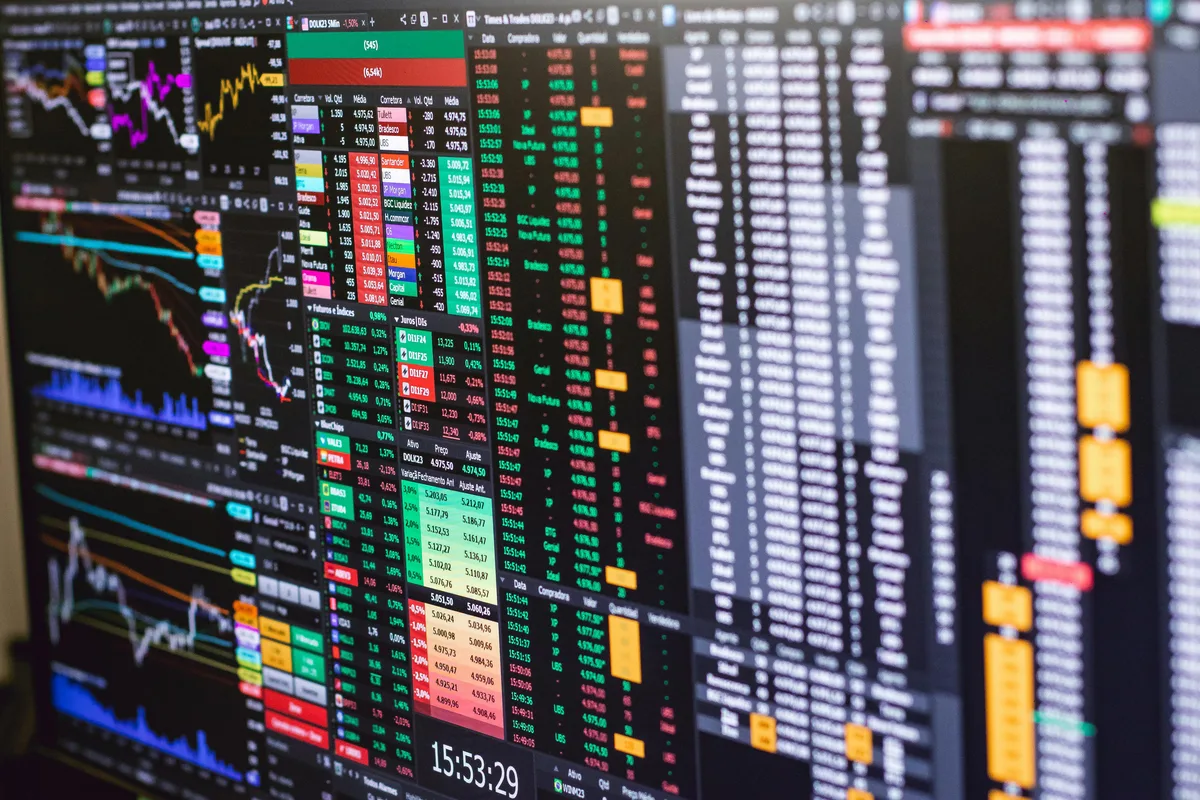
Understanding the mechanics removes a lot of the mystery. Here's what actually happens when you buy or hold a tokenized stock.
Who Holds the Shares?
In most cases, a regulated custodian — often a bank or a qualified financial institution — holds the underlying shares in a trust or a segregated account on your behalf. This is no different from how a brokerage holds shares through DTC (Depository Trust Company) in the traditional world.
The blockchain token you hold is essentially a receipt or a proof of that ownership. The actual legal title sits with the custodian; the token gives you the control, transferability, and transparency layer on top.
This means you get the benefits of blockchain technology — speed, transparency, programmability — without giving up the legal protections that come with regulated custody.
Smart Contracts and Settlement
When you trade a tokenized stock, a smart contract automatically verifies ownership, executes the transfer, and settles the transaction — all without the manual reconciliation steps that slow down traditional stock trading.
Traditional stock settlements take one to two business days (T+1 or T+2). Tokenized stock settlements happen in real time, or near-real time, often abbreviated as T+0. The trade executes, ownership transfers, and funds move — all within minutes or seconds.
This isn't just a technical nicety. Faster settlement reduces counterparty risk, frees up capital faster, and makes the entire system more efficient.
Tokenized Stocks vs. Regular Stocks — Side by Side
Here is how the two approaches compare across the dimensions that matter most for investors:
| Aspect | Tokenized Stocks | Regular Stocks |
|---|---|---|
| Ownership | Yes — via blockchain | Yes — via broker |
| Trading Hours | 24/7 | Exchange hours only |
| Settlement | Near-instant (T+0) | T+1 or T+2 |
| Fractional | Native | Sometimes via broker |
| Global Access | Borderless | Restricted by country |
| Shareholder Rights | Yes | Yes |
| Regulation | Emerging (SEC 2026 guidance) | Fully regulated |
Neither option is inherently better. But the tokenized version is gaining serious institutional momentum — and the data below makes that clear.
Real-World Examples You Should Know
This isn't theoretical. Major firms are already operating at significant scale.
BlackRock BUIDL — The $2.5B Signal
BlackRock's BUIDL fund (short for BlackRock USD Institutional Digital Liquidity Fund) is one of the most watched developments in this space. As of early 2026, it has surpassed $2.5 billion in assets under management and operates across eight different blockchains.
For context: BlackRock manages over $10 trillion in assets globally. When the world's largest asset manager deploys capital into blockchain-based financial products, it sends a clear signal that this technology is not going away.
BUIDL allows institutional investors to earn yield while holding tokenized assets — blending the rigor of traditional finance with the efficiency of digital infrastructure.
JPMorgan Kinexys — $1.5T Behind the Scenes
JPMorgan's Kinexys platform has processed over $1.5 trillion in transactions since 2020. While much of this volume involves institutional settlement and cross-border payments, it demonstrates that blockchain-based financial infrastructure can operate at genuinely global scale.
JPMorgan's involvement is particularly significant because the bank is famously conservative. It doesn't move into new markets lightly. Its active participation signals that tokenized securities are not a fringe experiment — they are a core strategic direction.
tZERO and Ondo Finance — The Retail On-Ramp
While BlackRock and JPMorgan focus primarily on institutional investors, platforms like tZERO and Ondo Finance are building the retail on-ramp to tokenized equities.
Ondo Finance has processed over $7 billion in cumulative trading volume since September 2025, making it one of the most active retail-facing platforms in the tokenized securities space. xStocks, another platform gaining traction, has facilitated more than $25 billion in total transaction volume since mid-2025.
These platforms are making it progressively easier for everyday investors to access tokenized stocks — and the volumes they are seeing suggest growing demand.

What Tokenized Stocks Unlock That Regular Stocks Can't
Here is where things get genuinely interesting for investors. The blockchain layer doesn't just digitize an existing process — it changes what is possible.
Fractional Ownership at Any Price Point
Some of the most valuable companies in the world — Nvidia, Amazon, the entire S&P 500 — have share prices that put full shares out of reach for many investors. Tokenized stocks make fractional ownership a native feature of the system.
You don't need a brokerage that offers fractional shares. The blockchain treats the token as divisible by design. Own one-hundredth of a share of Nvidia or one-thousandth of a share of the S&P 500 — whatever amount fits your budget. This democratizes access to premium-priced equities in a way that traditional brokerage systems were never designed to support.
24/7 Trading Across Borders
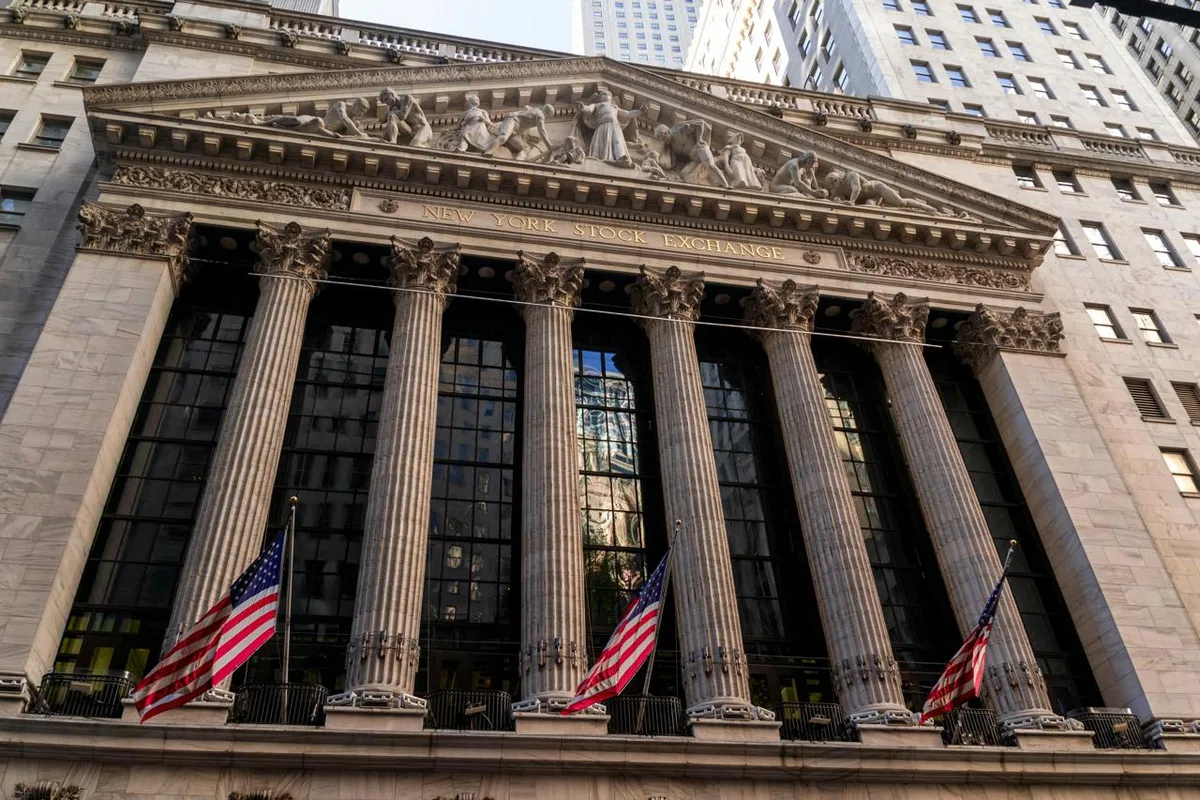
Traditional stock exchanges operate on fixed schedules — typically 9:30 AM to 4 PM Eastern, Monday through Friday, and not on holidays. Tokenized stocks trade around the clock, 24 hours a day, seven days a week.
This matters for several reasons. If major news breaks on a Saturday night, you don't have to wait until Monday morning to react. If you are an investor in a different time zone, you are not locked out of market hours that were designed for New York.
More importantly, tokenized stocks can be accessed globally in a way that traditional brokerage accounts cannot easily support. A person in Southeast Asia or Latin America can invest in tokenized US equities through a compatible platform, with full transparency and on-chain verification of ownership.
Using Stocks as DeFi Collateral
This is one of the most powerful and underappreciated features of tokenized stocks. In decentralized finance (DeFi), tokenized stocks can be used as collateral for loans, liquidity provision, and other financial strategies — without selling the underlying asset.
Imagine earning yield on your stock portfolio while still holding it, or using your shares to access liquidity without triggering a taxable event. This is already possible with tokenized stocks on select DeFi platforms, and it is one of the clearest examples of how blockchain technology creates genuine financial utility rather than just digitizing an existing product.
Faster, Cheaper Settlement
The traditional settlement system involves multiple intermediaries — brokers, custodians, clearinghouses, and depositories — each taking a fee and adding time. Blockchain-based settlement removes much of this overhead.
Near-instant settlement (T+0) means less capital tied up in pending transactions, fewer failed settlements, and lower costs for investors over time. For institutional traders moving large volumes, these savings compound significantly.
The Safety Picture — What You Should Know
It is reasonable to ask: is this safe? The answer is nuanced, but the overall picture is more reassuring than the headlines might suggest.
Institutional backing is a powerful trust signal. When BlackRock, JPMorgan, and Fidelity are building and using tokenized securities infrastructure, they are not doing so carelessly. These firms have compliance teams, legal teams, and risk management frameworks that dwarf those of most companies in the crypto space. They would not be allocating resources to tokenized securities if the regulatory and operational framework were not sufficiently mature.
The SEC issued formal guidance on tokenized securities in January 2026, bringing additional regulatory clarity to the space. This is not the Wild West — regulators are paying attention and establishing frameworks.
The underlying assets are real. Unlike many crypto tokens, tokenized stocks represent genuine company shares. When you hold a tokenized Apple share, a real Apple share sits in a regulated custodian's account in your name. You are not relying solely on the integrity of a blockchain network — you have the full weight of equity ownership behind your position.
The platforms themselves are becoming more regulated as the market matures. Platforms like tZERO and Ondo Finance are operating under expanding regulatory oversight, adding layers of investor protection that early-stage crypto markets lacked.
No investment is without risk. But the combination of institutional involvement, growing regulatory clarity, and real underlying assets makes tokenized stocks a credible and increasingly mainstream category.
Frequently Asked Questions
Are tokenized stocks legal?
Yes. The SEC issued guidance on tokenized securities in January 2026, and platforms offering tokenized stocks operate under regulatory frameworks in their respective jurisdictions. The key is to use regulated, reputable platforms — just as you would with any financial product.
Do tokenized stocks pay dividends?
Yes. When a company issues a dividend, the economic benefit flows through to tokenized shareholders. The custodian holding the underlying shares distributes dividends proportionally to token holders according to the platform's terms.
Can I lose more than I invested?
In most cases, your maximum loss is the amount you invested — the same as with regular stocks. Tokenized stocks represent ownership in real companies, and their value moves with the underlying share price. As with any equity investment, you can lose your entire investment if the company's value falls to zero, but you are not exposed to the open-ended losses possible with leveraged instruments.
How do I buy tokenized stocks?
Several platforms are building retail access, including tZERO and Ondo Finance. As the market develops, more brokerages and financial apps are expected to add tokenized securities to their offerings. Neo can help you track and manage all your investments — traditional and tokenized — in one place. [https://tryneoapp.com]
Is this the same as Bitcoin or Ethereum?
No. Bitcoin and Ethereum are native blockchain assets with no underlying company backing them. Tokenized stocks are digital representations of real company shares — the same shares you could buy through a traditional brokerage, just delivered through blockchain infrastructure.
What's the minimum investment?
Because tokenized stocks support native fractional ownership, the minimum investment can be much lower than buying a full share on a traditional exchange. The exact minimum depends on the platform, but fractional access means you can invest amounts that would be impossible with conventional share purchases.
Whether you are curious about blockchain technology or simply looking for more flexible ways to invest, tokenized stocks represent one of the most significant developments in financial markets in recent years. The infrastructure is real, the volumes are growing, and some of the most trusted names in finance are leading the way.
If you want to stay on top of how these markets evolve — and keep all your investments organized in one place — apps like Neo can help you track and manage everything from traditional equities to the new generation of tokenized assets. [https://tryneoapp.com]
This article is for informational purposes only and does not constitute financial advice. All investments carry risk, including the potential loss of principal. Past performance is not indicative of future results. Consult a qualified financial advisor before making investment decisions.