
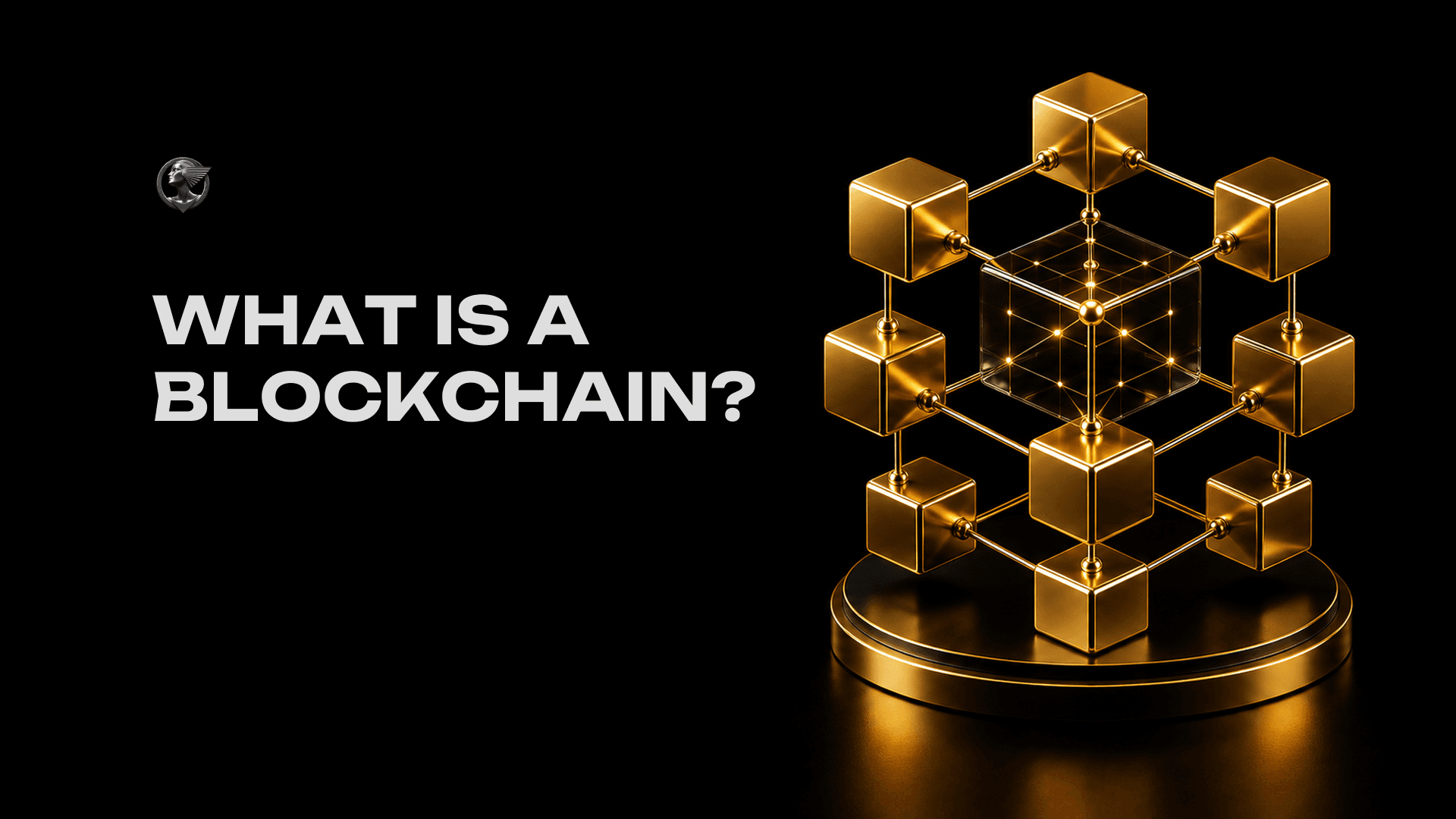
What is a blockchain?
The shared notebook that thousands of strangers keep in sync without anyone in charge, and why that single idea changed money.
A blockchain is a database. That is the boring, accurate answer. The interesting part is that it is a database run by no one, copied by everyone, and almost impossible to tamper with after the fact.
Every bank, broker, and government agency you have ever interacted with runs its own private database. Their version is the truth. If they get hacked, lose a backup, or simply make a mistake, you have to argue your way back to whatever they decide is correct. A blockchain is a different bet: instead of one party holding the truth, thousands of independent computers hold identical copies and agree on updates in public.
A shared notebook, kept by strangers
Imagine a notebook that records who owes what to whom. Every page is a "block" of new entries. The notebook lives in thousands of places at once, and every few seconds the keepers compare notes, agree on the next page, and glue it onto the back. The chain of glued-together pages is the blockchain.
Once a page is glued on, changing it would mean changing every copy, in every location, faster than the next page can be added. In practice that is impossible. The history is effectively permanent.
Why "trustless" is a feature, not a flaw
When people in crypto say "trustless," they do not mean nobody trusts anything. They mean you do not have to trust a specific company, person, or government for the system to work. The math and the network of computers do the work that an institution would normally do.
This sounds abstract until you imagine a country where banks freeze accounts, currencies collapse, or borders block payments. In those places, a system that does not need anyone's permission is not a curiosity. It is a lifeline.
How a transaction actually flows
- You sign a transactionwith your private key
- Broadcast to the networkthousands of nodes see it
- Validators bundle itinto the next block
- Block is added to the chainpermanent and public
No bank approves it. No clearing house batches it overnight. The network itself does the work, usually in seconds. The transaction is final the moment enough validators agree, and visible to anyone, anywhere.
Public and permissionless
Two more words you will hear constantly. "Public" means anyone can read every transaction that has ever happened on the chain. "Permissionless" means anyone can write to it without asking permission, as long as they pay the small fee that keeps spam out.
You can verify any wallet balance, trace any transfer, and audit any contract, all without an account. The trade-off is that it is also visible to everyone else. Privacy on a blockchain is its own deeper topic.
- Open: anyone can read the data, no login required.
- Permissionless: anyone can transact without an account.
- Append-only: history is added but never edited.
- Censorship-resistant: no single party can block your transaction.
- Programmable: code can run inside the chain itself, not just on top of it.
The internet let strangers exchange information. The blockchain lets strangers exchange value.
In the next lesson we look at the first blockchain that actually worked at scale: Bitcoin, and the surprisingly simple idea that started everything.