
Inflation Explained: What It Really Costs You and How to Fight Back
Understand what inflation actually is, how it erodes purchasing power, and practical strategies to protect your money. Learn current US inflation rates and real tactics for preserving wealth.
Inflation Explained: What It Really Costs You and How to Fight Back
Here's a number that should make you uncomfortable: $100 in 2010 has the same purchasing power as about $140 today. That's not an opinion. It's arithmetic. The money you held in 2010 buys less now, and it will buy even less in 2035.
This isn't some abstract economic concept. It's your grocery bill. Your rent. Your savings account that never seems to grow. Inflation is the quiet tax that erodes everything—wages, savings, fixed incomes—unless you actively do something about it.
What Inflation Actually Is (It's Not Just "Prices Going Up")
Everyone knows prices go up. The deeper question is: why?
Economists argue about causes, but the simplest framework involves supply and demand, plus monetary policy. When too much money chases too few goods, prices rise. When central banks print money aggressively, the currency weakens. When supply chains break (like COVID did), goods become scarcer relative to demand.
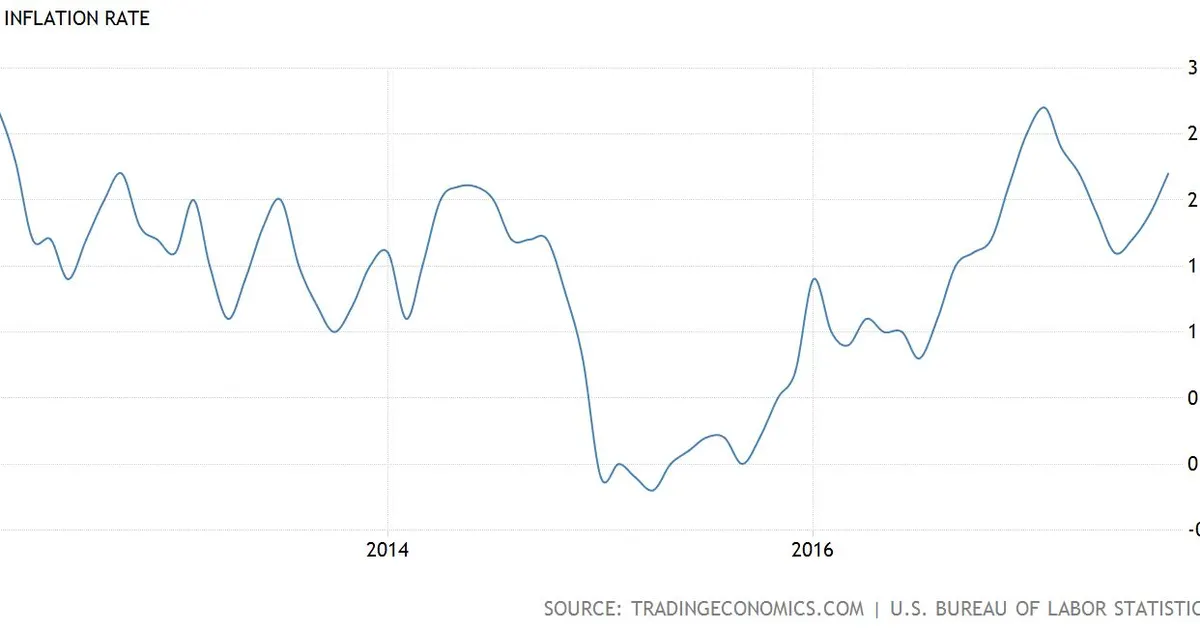
The official measure is CPI—the Consumer Price Index. The Bureau of Labor Statistics tracks a basket of goods: food, energy, housing, transportation, medical care. When the CPI rises 3%, it means this basket costs 3% more than it did a year ago.
As of March 2026, US CPI sits at 3.3% year-over-year. That means the basket costs 3.3% more than it did in March 2025. Core CPI—which excludes volatile food and energy—was 2.6%. The Fed's long-term target is 2.0%, and forecasts suggest inflation will average 2.2% through the remainder of 2026.
Notice that word "average." Some months are worse than others. March 2026 saw food prices unchanged monthly but up 2.7% annually. Energy surged 12.5% year-over-year, with gasoline jumping 21.2% in a single month. Your personal inflation rate depends on what you actually spend money on.
The Real Cost: How Inflation Destroys Purchasing Power
Here's where it gets personal. Let's say you have $50,000 in savings earning 1% interest annually (generous for most bank accounts in 2024-2025). After one year, you have $50,500. But if inflation was 3.3%, that $50,500 only buys what $48,887 bought a year ago.
You've lost $1,613 in real terms. Your savings account grew in number but shrank in what it can actually purchase.
Over 10 years, assuming modest 2.5% inflation: $50,000 today would need $64,000 just to have the same purchasing power. If your savings aren't growing faster than inflation, you're falling behind.
This is why financial advisors obsess over "real returns"—returns after inflation. A portfolio that returns 8% with 4% inflation gives you 4% real growth. One returning 6% with 2% inflation gives you 4% real growth too. The nominal number is meaningless without the inflation context.
Where Inflation Hurts Most: Specific Groups
Some people feel inflation more acutely than others:
Fixed-income retirees are particularly vulnerable. If you're living on $40,000 annually from Social Security and inflation runs 3%, you need $41,200 to buy the same basket of goods next year. Social Security has cost-of-living adjustments (COLAs), but they often lag actual inflation. The COLA for 2026 is 2.9% for food prices, but actual spending patterns of retirees (heavy on medical care) don't always match the CPI basket.
Low-wage workers face a dual squeeze. Wages rarely keep pace with inflation in real-time, meaning purchasing power drops before wage negotiations catch up. The delay between price increases and wage increases can span years.
Cash-heavy investors lose purchasing power without earning anything. Money market funds, savings accounts, and CDs often pay nominal interest below the inflation rate, guaranteeing negative real returns.
Anyone delaying major purchases pays more if they wait. A car, house, or tuition that costs $50,000 today might cost $54,000 in two years at 4% inflation. Delaying costs money.
The Bright Side: Who Actually Benefits From Inflation
Inflation isn't uniformly destructive. Some entities benefit:
Borrowers with fixed-rate debt see their real debt burden shrink. If you have a 30-year mortgage at 3% interest and inflation runs 4%, your real interest cost is negative—you're borrowing money that's worth less when you repay it. In the 1970s, people who bought houses with 7% mortgages effectively had the government pay part of those mortgages as home values and rents rose with inflation.
Asset owners see the value of property, stocks, and businesses rise with prices. A rental property generating $1,000 monthly in income becomes worth more when同类 assets appreciate, and rents typically increase with inflation.
Governments benefit from inflation because it erodes the real value of debt. The US national debt is nominally fixed, but inflation effectively reduces what each dollar of debt represents in real economic output.
This is why inflation debates are inherently political. Higher inflation helps borrowers and hurts lenders. It helps asset owners and hurts cash holders. The same economic phenomenon produces wildly different outcomes depending on your balance sheet.
How to Protect Yourself: Practical Strategies
Understanding inflation is step one. Doing something about it is step two.
TIPS: Treasury Inflation-Protected Securities adjust their principal value with CPI. If you buy $10,000 of TIPS and inflation runs 5%, your principal becomes $10,500. You still receive a base interest rate, but it's applied to the inflated principal. The downside: if deflation occurs, your principal drops. These are boring but effective for conservative investors.
I-Bonds from the US Treasury adjust semiannually with CPI, currently paying competitive rates. They're limited to $10,000 annually per person, but they're one of the simplest inflation-hedging tools available.
Stocks historically outperform during inflationary periods, particularly companies with pricing power—the ability to raise prices without losing customers. Consumer staples, energy companies, and businesses with strong brand loyalty pass costs to customers more easily than commodity businesses.
Real estate has historically been an inflation hedge because property values and rents tend to rise with general price levels. This is part of why 2020-2022 saw housing prices surge—inflationary expectations drove buyers to tangible assets.
Commodities like gold, oil, and agricultural products directly benefit from price increases. Gold doesn't produce income, but it's held as a store of value across centuries. The 1970s saw gold rise from $35 to $850 per ounce as inflation spiraled.
The critique of Bitcoin as inflation hedge remains valid—Bitcoin's volatility makes it a poor store of value in short timeframes, but some argue its fixed supply (21 million coins) makes it structurally anti-inflationary. This debate continues without resolution.
The Interest Rate Connection
Understanding inflation requires understanding its relationship with interest rates.
Central banks—primarily the Federal Reserve in the US—use interest rates as their primary inflation-fighting tool. When inflation rises above target (2%), central banks raise rates. Higher rates increase borrowing costs, reduce spending, cool demand, and help bring inflation back down.
As of early 2026, with CPI at 3.3% and Fed funds rates elevated, the practical implication is that borrowing is expensive. Mortgage rates in the 6-7% range, car loans at 7-8%, and business credit at high-single-digit percentages. This is the intended mechanism: make spending costly to reduce inflationary pressure.
The risk is overcorrection. Raise rates too aggressively and you trigger a recession. The Fed's challenge is threading the needle—reducing inflation without causing massive unemployment. History suggests this is harder than it sounds; the Volcker era raised rates to 20% in the early 1980s to break inflation, but the recession that followed was severe.
The Bottom Line: Inflation Is Manageable
You can't control inflation. Neither can governments, not entirely. What you can control is your response.
The worst response is doing nothing—holding cash that erodes in real terms, refusing to invest because "the market feels risky," or assuming your wages will magically keep pace.
Better responses include: maintaining some inflation-protected securities in your portfolio, owning assets (stocks, real estate) that historically appreciate with inflation, staying invested rather than trying to time the market, and periodically reviewing whether your income is keeping pace with your actual cost of living.
The goal isn't to "beat" inflation. That's impossible for most people. The goal is to ensure your wealth doesn't systematically erode over time—and that your income grows at least as fast as what you're paying for the essentials.
Inflation is a fact of economic life. Understanding it removes fear, and acting on it is how people protect their futures.
Related Concepts:
- CPI (Consumer Price Index) — The official measure of inflation, tracking price changes of a basket of consumer goods and services.
- Core Inflation — CPI excluding volatile food and energy prices, considered a cleaner signal of underlying inflation trends.
- Purchasing Power — How much your money can buy. Inflation reduces purchasing power over time.
- Real Returns — Investment returns minus inflation. A "real" 4% return means your purchasing power grows 4%, not just your account balance.
- TIPS (Treasury Inflation-Protected Securities) — US government bonds that adjust principal with CPI, protecting against inflation.
- Interest Rates — The cost of borrowing money, set by central banks as their primary tool to control inflation.